

Introduction
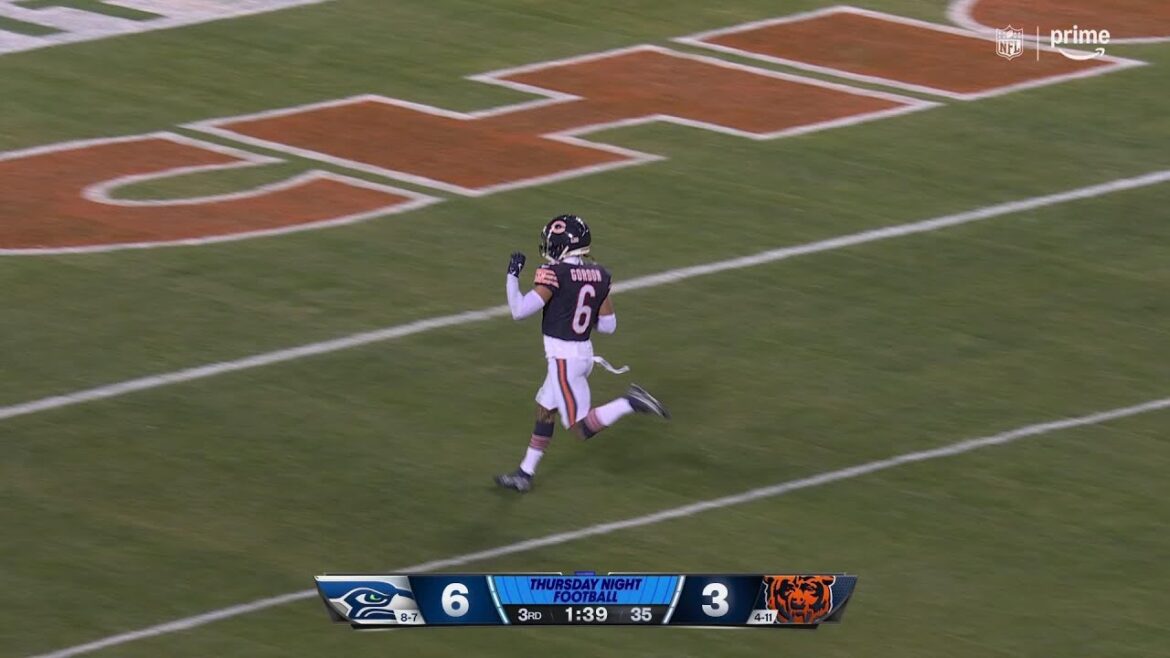
In a hard-fought contest between the Seattle Seahawks and the Chicago Bears, fans expected an electrifying offensive display. Instead, they got an old-school defensive showdown reminiscent of the NFL’s grind-it-out days. The final score—6-3 in favor of the Seahawks—tells you everything you need to know about how this matchup unfolded. Both teams battled fiercely, but it was the defenses that stole the show, dictating the tempo, frustrating quarterbacks, and limiting big plays. This article breaks down the Seahawks vs Chicago Bears match player stats, analyzing how the key players performed, what defined the outcome, and what this result means for both sides moving forward.
Game Overview: A Clash of Defenses
The Seattle Seahawks entered this matchup with a 9-7 record, including a stellar 6-1 record on the road, demonstrating resilience and adaptability. Meanwhile, the Chicago Bears, still rebuilding after a 4-12 season, showcased a 4-5 record at home, struggling to find rhythm but showing flashes of improvement.
The first half of the game was dominated by punting, stalled drives, and strong defensive coverage. Neither offense could sustain momentum, with both quarterbacks facing relentless pressure from the opposing defense. Chicago’s defensive front applied consistent heat on Seattle’s offensive line, while the Seahawks’ secondary shut down passing lanes, forcing short, ineffective throws.
Ultimately, the Seahawks edged out the Bears, securing a narrow 6-3 win thanks to two crucial field goals and their defense’s ability to hold the Bears to just a single field goal.
First Quarter: Establishing the Tone
The game opened with both teams testing each other’s defenses. The Seahawks attempted to stretch the field early, but Chicago’s cornerbacks—especially Jaylon Johnson—were disciplined and aggressive. On the other side, Justin Fields tried to ignite the Bears’ offense with quick reads, yet Seattle’s linebackers, led by Bobby Wagner, quickly closed gaps.
By the end of the first quarter, it was clear this wouldn’t be a high-scoring affair. Each side managed only a couple of first downs, with both punters seeing more action than expected.
Second Quarter: Field Goals and Frustrations
Midway through the second quarter, the Seahawks found themselves in field goal range after a 34-yard completion from Geno Smith to DK Metcalf. That play stood as one of the few offensive highlights of the game. Kicker Jason Myers nailed a 42-yard field goal, giving Seattle a 3-0 lead.
Chicago responded later with a steady drive led by Khalil Herbert on the ground, setting up Cairo Santos for a 39-yard field goal. The crowd at Soldier Field roared with approval, but the tie at 3-3 hardly reflected an offensive breakthrough.
The remainder of the half continued the same pattern: defenses dictating every play, pass rushers collapsing pockets, and offensive coordinators scrambling for answers.
Third Quarter: Defensive Dominance Continues
Coming out of halftime, both teams attempted to adjust. Seattle’s offensive coordinator Shane Waldron leaned more on short passes and play-action to neutralize Chicago’s blitz. However, Bears linebacker Tremaine Edmunds proved instrumental, racking up multiple tackles and deflecting a pass on a critical third down.
Meanwhile, Seattle’s defensive line, spearheaded by Jarran Reed and Leonard Williams, disrupted Fields’ timing repeatedly. The Bears’ offensive line had difficulty handling Seattle’s stunts, resulting in two sacks and multiple pressures.
Despite better offensive positioning, neither team capitalized on opportunities. The quarter ended scoreless, maintaining the 3-3 deadlock.
Fourth Quarter: The Game-Winning Drive
The defining moment came late in the fourth quarter. With under five minutes remaining, Geno Smith orchestrated a steady, time-consuming drive. Mixing short completions to Tyler Lockett and strategic runs by Kenneth Walker III, Seattle methodically moved into scoring territory.
Facing third-and-eight from the Bears’ 28-yard line, Smith delivered a pinpoint throw to Noah Fant, setting up a manageable field goal attempt. Jason Myers once again came through, converting a 41-yard field goal that put the Seahawks up 6-3.
The Bears had one final chance, but their last drive ended abruptly when Tariq Woolen intercepted a deep pass intended for DJ Moore, sealing the victory for Seattle.
Key Player Performances (Seahawks)
| Player | Position | Key Stats |
|---|---|---|
| Geno Smith | QB | 19/31, 187 yards, 0 TD, 0 INT |
| Kenneth Walker III | RB | 17 carries, 66 yards |
| DK Metcalf | WR | 6 receptions, 78 yards |
| Tyler Lockett | WR | 5 receptions, 45 yards |
| Bobby Wagner | LB | 11 tackles, 1 TFL |
| Tariq Woolen | CB | 1 INT, 3 PDs |
| Jason Myers | K | 2/2 FG (42, 41 yards) |
The Seahawks’ defense clearly anchored this victory. Bobby Wagner was the heartbeat of the unit, commanding respect and ensuring that Chicago’s running game stayed contained. Tariq Woolen’s interception in crunch time proved decisive, showcasing why Seattle values his coverage instincts.
Offensively, Geno Smith maintained composure despite constant pressure, avoiding turnovers—a key reason Seattle stayed in control late.
Key Player Performances (Chicago Bears)
| Player | Position | Key Stats |
|---|---|---|
| Justin Fields | QB | 15/28, 152 yards, 1 INT |
| Khalil Herbert | RB | 15 carries, 61 yards |
| DJ Moore | WR | 7 receptions, 69 yards |
| Cole Kmet | TE | 3 receptions, 28 yards |
| Tremaine Edmunds | LB | 12 tackles, 2 PDs |
| Jaylon Johnson | CB | 4 tackles, 1 PD |
| Cairo Santos | K | 1/1 FG (39 yards) |
Despite the loss, Chicago’s defense performed admirably. Edmunds and Johnson were outstanding in coverage and run support. However, Justin Fields’ inability to stretch the field or connect on explosive plays left the Bears stagnant.
Statistical Breakdown
| Category | Seahawks | Bears |
|---|---|---|
| Total Yards | 268 | 239 |
| Passing Yards | 187 | 152 |
| Rushing Yards | 81 | 87 |
| First Downs | 15 | 13 |
| Turnovers | 0 | 1 |
| Time of Possession | 31:42 | 28:18 |
The stats underline the razor-thin margin between the two sides. Both struggled offensively, but Seattle’s turnover-free football and slightly better field position were the deciding factors.
Coaching Analysis
Pete Carroll’s Seahawks displayed veteran discipline. Instead of forcing plays, they embraced the grind, trusted their defense, and relied on field position and special teams to edge out the Bears.
In contrast, Matt Eberflus’s Bears executed well defensively but failed to adapt offensively. Chicago’s conservative approach, while keeping them competitive, lacked creativity when it mattered most.
Defensive Masterclass: Lessons from Both Sides
This game highlighted the value of defensive fundamentals—tackling, gap discipline, and coverage integrity. Seattle and Chicago each showcased elite defensive execution, with linebackers and safeties reading plays effectively.
However, Seattle’s slight edge in situational awareness—particularly on third downs—proved the difference. The Seahawks held the Bears to just 3-of-13 on third-down conversions, compared to Seattle’s 5-of-14.
Special Teams Impact
When offense stalls, special teams become crucial. Jason Myers’ reliability provided the Seahawks with confidence, while Michael Dickson’s punting flipped the field multiple times. For Chicago, Trenton Gill also performed well, but they lacked the field position advantage Seattle managed late in the game.
Injury Report and Game Implications
Both teams escaped without major injuries, though Seattle’s offensive line showed signs of fatigue. The victory improved Seattle’s record to 10-7, bolstering their playoff aspirations, while Chicago dropped to 4-13, further emphasizing their need to rebuild offensive consistency.
Post-Game Reactions
Players and coaches expressed mutual respect. Geno Smith credited his defense, saying, “They carried us today—we just had to do our part.”
Meanwhile, Justin Fields admitted, “We’ve got to finish drives; field goals and punts won’t cut it in this league.”
What This Means Going Forward
For the Seahawks, this game reaffirmed their defensive identity. If they can continue to protect the football and rely on their veterans, they’ll remain a tough playoff contender.
The Bears, on the other hand, must find answers offensively. Fields has shown flashes, but consistency and pocket awareness remain question marks heading into next season.
Conclusion
The Seahawks vs Chicago Bears match player stats reveal a contest defined by defense, discipline, and situational execution. It wasn’t flashy, but it was pure football grit—a reminder that not every victory comes from offensive fireworks. Sometimes, it’s about holding your ground, capitalizing on small openings, and trusting your fundamentals. Seattle did exactly that, walking away victorious from Soldier Field with their playoff hopes alive, while the Bears return to the drawing board, still searching for offensive rhythm and identity.
FAQs
Q1: Who won the Seattle Seahawks vs Chicago Bears game?
A1: The Seattle Seahawks won the game 6-3 in a tight defensive battle.
Q2: Who were the standout players for the Seahawks?
A2: Bobby Wagner, Tariq Woolen, and Jason Myers stood out for their consistent performances and key plays.
Q3: How did Justin Fields perform against the Seahawks?
A3: Fields completed 15 of 28 passes for 152 yards with one interception. He struggled to generate big plays under heavy pressure.
Q4: What was the turning point of the game?
A4: Tariq Woolen’s late-game interception sealed the win for Seattle after Jason Myers’ go-ahead field goal.
Q5: What does this result mean for both teams?
A5: The Seahawks improved their playoff position with the win, while the Bears must address offensive inefficiencies for future success.